Choosing Furniture Finishes for a Riyadh Villa
Choose melamine, laminate, or lacquer by light, touch, cleaning, wear, and repair—not by a small screen image.
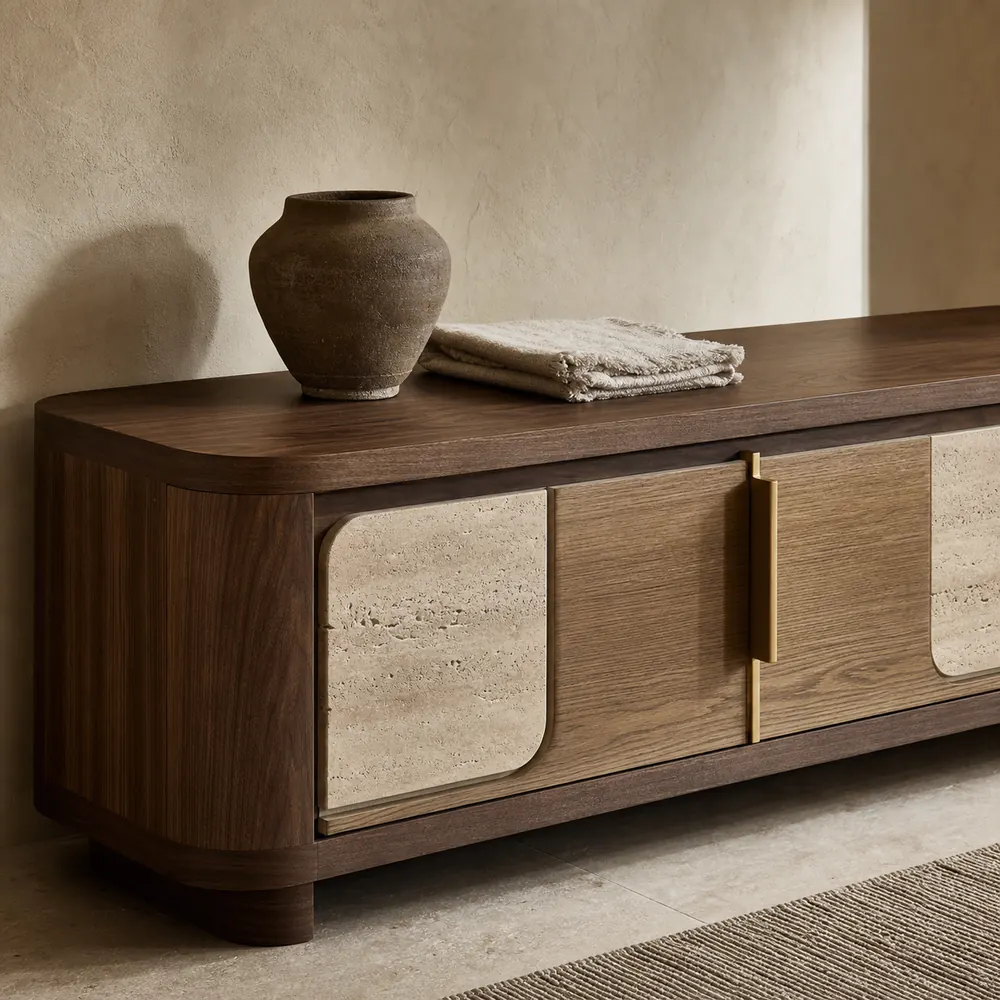
The finish occupies more of your view than almost any hardware choice. It also receives fingerprints, cleaning cloths, sunlight, and the occasional impact. The right finish is not simply the most expensive one; it is the system whose appearance and maintenance fit the room.
Read the room before choosing a sample
Riyadh daylight can be intense, but every room receives it differently. A west-facing space may warm a beige or timber-look décor in the afternoon. A north-facing dressing room may need texture or warmer integrated lighting to keep a grey finish from feeling flat. Large glossy surfaces can reflect windows, spotlights, and everyday objects more strongly than expected.
Begin with the fixed context: floor, wall colour, stone, metalwork, doors, and the view into the next room. Decide whether the fitted piece should recede quietly or become a feature. Then view a physical sample upright, because a vertical door catches light differently from a sample laid flat on a desk. Move it through daylight and evening lighting before approval.
Sheen changes both appearance and upkeep. Deep matte surfaces can look calm but may differ in fingerprint resistance. High gloss increases reflected light and makes alignment especially visible. Textured woodgrain can add warmth without pretending that the panel is solid timber. Ask to see the matching edge band and a corner detail, not just the centre of a large board.
Melamine, laminate, and lacquer solve different needs
Melamine is a factory-applied decorative face available in solid colours, textures, and woodgrain designs. It is an efficient choice for wardrobe interiors and many visible fronts, with consistent colour and straightforward cleaning. The board grade, edge band, adhesive, and workmanship still form part of the result.
Laminate is a separate surface sheet bonded to an engineered substrate. Selected grades can suit frequently handled or harder-working areas and offer distinctive textures. Because it involves another fabrication step, use it where its performance or look has value rather than adding it automatically to every hidden surface.
Lacquer is sprayed over carefully prepared MDF. It supports a broad colour choice, seamless-looking faces, and routed door profiles. Matte, satin, and selected gloss systems each reflect light differently. Lacquer needs realistic care: hard knocks can chip paint, and future colour matching may show a small difference as the original surface ages.
Mixed specifications are often sensible. A lacquered feature front can sit with durable melamine interiors; a laminate work surface can be paired with quieter doors. Define every transition and exposed edge on the drawing so “mixed finish” does not become an improvised site decision.
Fluted fronts: specify the detail, not just the effect
A fluted front uses a repeated rib or groove to create texture. In an honest engineered-panel specification, the profile may be routed into suitable MDF and finished with lacquer, or assembled from repeat decorative strips over a stable substrate; it is not evidence of solid-timber construction. Record the substrate, flute pitch and depth, direction, and junctions on the drawing. A deep, narrow profile casts stronger light and shadow than a shallow, broad one, so view a full-height sample from the room’s main approach and under both daylight and evening light.
The sample should also show how the top, bottom, door edge, corner, and any handle recess are finished. An attractive face with raw groove ends or poorly sealed edges is not a complete detail. Repeated valleys collect more fine dust than a flat front: test whether a soft brush, low-suction vacuum tool, or lightly damp microfibre cloth can reach the profile without abrading its coating. Before approval, ask whether a damaged front can be removed and replaced independently, and retain the profile drawing, finish code, and sample; repairing a deep chip invisibly may be less reliable than replacing one accessible front.
Make maintenance part of the design
Ask what to use for normal cleaning and what to avoid. A soft damp cloth and prompt drying are generally safer than abrasive pads or aggressive chemicals, but the supplied product guidance should govern. Near an entrance or children’s room, consider how easily a marked door can be cleaned or replaced. Near a coffee point or vanity, protect joints from persistent liquid and preserve access to plumbing.
Keep one labelled sample and the approved finish code in the handover file. Names such as “warm oak” vary between suppliers and production batches; the actual code and sample are the useful record.
Practical checklist
- Compare each sample beside the real floor, wall, stone, and metal finishes.
- View it vertically in morning, afternoon, and evening light.
- Confirm face, edge band, sheen, handle or profile, and corner detail together.
- Put melamine, laminate, and lacquer only where each adds practical value.
- For a fluted front, record its substrate, profile, end and edge finish, cleaning method, and replaceable-front route.
- Ask for cleaning guidance and a realistic repair or replacement route.
- Record the supplier code and retain an approved labelled sample.
Collect two or three finish directions rather than twenty disconnected images. Upload them in Design Yours or share them on WhatsApp with a room photo, and the specification can begin with the light and use of your villa.