MDF vs Solid Wood for Saudi Homes: An Honest Fitted-Furniture Comparison
Compare stability, finish, repair, moisture exposure, and specification—not material labels—before choosing fitted furniture.
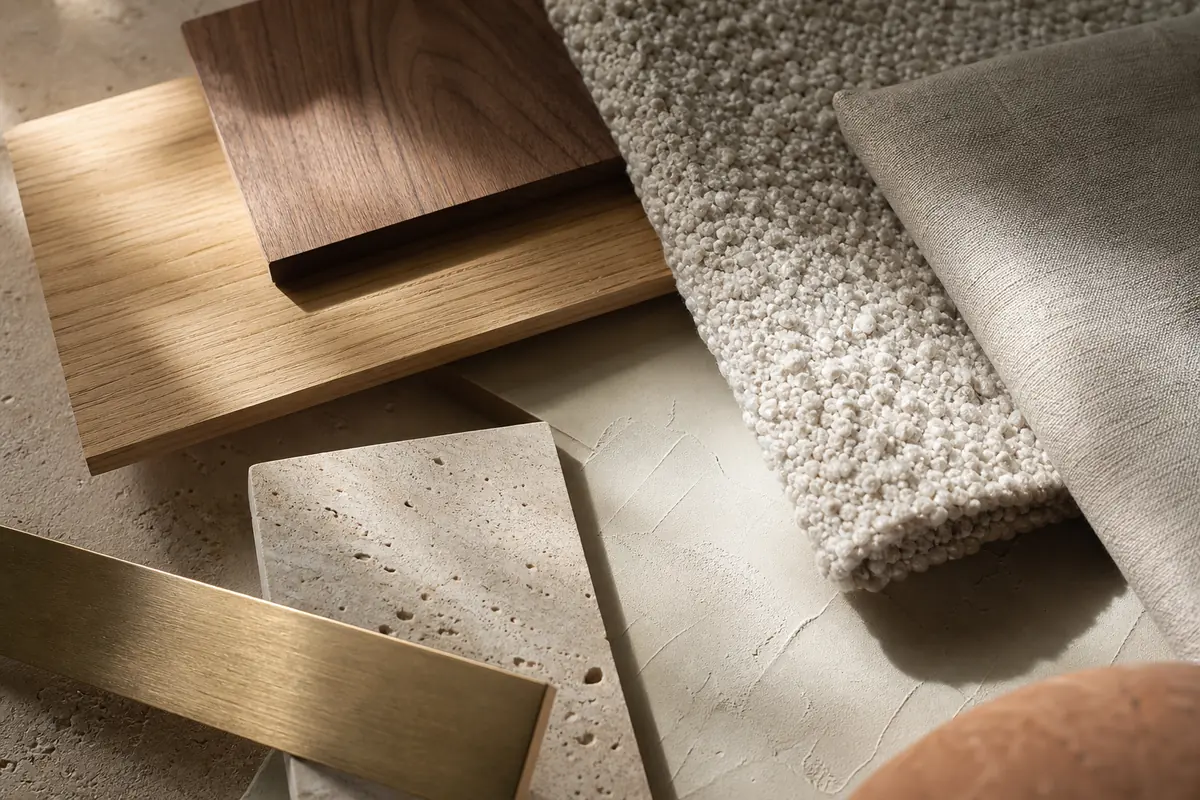
“Is MDF good, or should I ask for solid wood?” sounds like a simple buying question. For fitted wardrobes and cabinetry, it is incomplete. A useful answer depends on the component, its span and load, the surface finish, the edge treatment, exposure to water, and the quality of fabrication and installation.
Tajhaus specifies fitted furniture as an engineered-panel system. The aim is not to imitate solid-timber construction in the wording; it is to choose an appropriate, documented board and finish for every part.
The materials behave differently
MDF is formed from refined wood fibres under heat and pressure. Its consistent density produces a flat face and a smooth machined edge, which is why it works well for routed doors and lacquered fronts. It also accepts concealed fittings predictably when thickness, fastener, and drilling pattern are correct. A long shelf still needs a suitable thickness, support, and load limit: the letters MDF do not solve structural design by themselves.
Solid wood is sawn from a tree and retains natural grain, colour variation, and movement. Skilled joinery allows for that movement, and local repairs can sometimes be straightforward. It can be the right choice for a particular table, frame, or traditional detail. In a wall-to-wall cabinet, however, natural material prestige does not remove the need for flat panels, accurate clearances, stable doors, suitable hardware, and a plan for seasonal movement.
Furniture-grade chipboard is another engineered option often used for cabinet interiors. When it has a durable factory face, well-banded edges, and connectors placed for the board, it can make a practical carcass. A quote that merely says “wood” tells you less than one that identifies MDF or chipboard, thickness, face material, and edge treatment.
Finish and environment change the answer
MDF can sit beneath melamine, laminate, veneer-look surfaces, or lacquer. Each system has a different appearance, cleaning routine, impact response, and price. A well-prepared lacquer front and a melamine wardrobe interior are not interchangeable simply because both may use MDF somewhere underneath.
Saudi homes are air-conditioned for much of the year, but local risks still matter: wet mopping at a plinth, a plumbing leak, condensation near a service, or a warm wall with poor ventilation. No wood-based board benefits from persistent water. Protect lower edges, specify suitable plinth details, keep wet areas accessible, and repair leaks promptly. “Moisture resistant” is a grade with limits, not permission to leave an edge in standing water.
Ask about repair too. A loose hinge may need adjustment or a planned repair plate; a chipped painted face may need a controlled touch-up; a swollen edge caused by a leak may require component replacement. The warranty and care document should explain the service route instead of promising that a material is indestructible.
Compare a specification, not a slogan
For each quote, identify the substrate of carcasses, shelves, doors, and decorative closures separately. Then record the thickness, exposed-edge finish, hinge and runner schedule, shelf spans, lighting penetrations, and installation scope. This is a more reliable quality comparison than treating “solid wood” as a universal upgrade or “MDF” as one uniform product.
The best choice is often a system: a stable engineered carcass, the right front substrate for the chosen design, a surface suited to daily use, and hardware sized for the doors and drawers. The performance comes from those decisions working together.
Practical checklist
- Ask which components are MDF, chipboard, or another named substrate; do not accept “wood” as the full description.
- Record board thickness, surface material, and edge treatment for visible and hidden parts.
- Check shelf span and expected load, especially for wide shoe or linen shelves.
- Discuss water risks at plinths, nearby plumbing, and cleaning edges.
- Compare samples of the finished surface, not unfinished board offcuts alone.
- Keep the approved specification and written warranty with the handover file.
If you can share a room photo, approximate dimensions, and the finish you like, Design Yours or WhatsApp is enough to start a component-by-component specification before the final survey.